

Vintage indent Christmas ornaments are some of the most recognizable pieces in a collector’s box. With their recessed centers, reflective shapes, and delicate glass construction, they were designed to catch the light on a Christmas tree.
They can also be confusing to identify because people often use terms like “indent,” “reflector,” “double indent,” and “vintage glass ornament” interchangeably. This guide breaks down what to look for, especially if you are trying to identify older German glass examples or decide whether a piece belongs in your vintage ornament collection.
What Is an Indent Christmas Ornament?
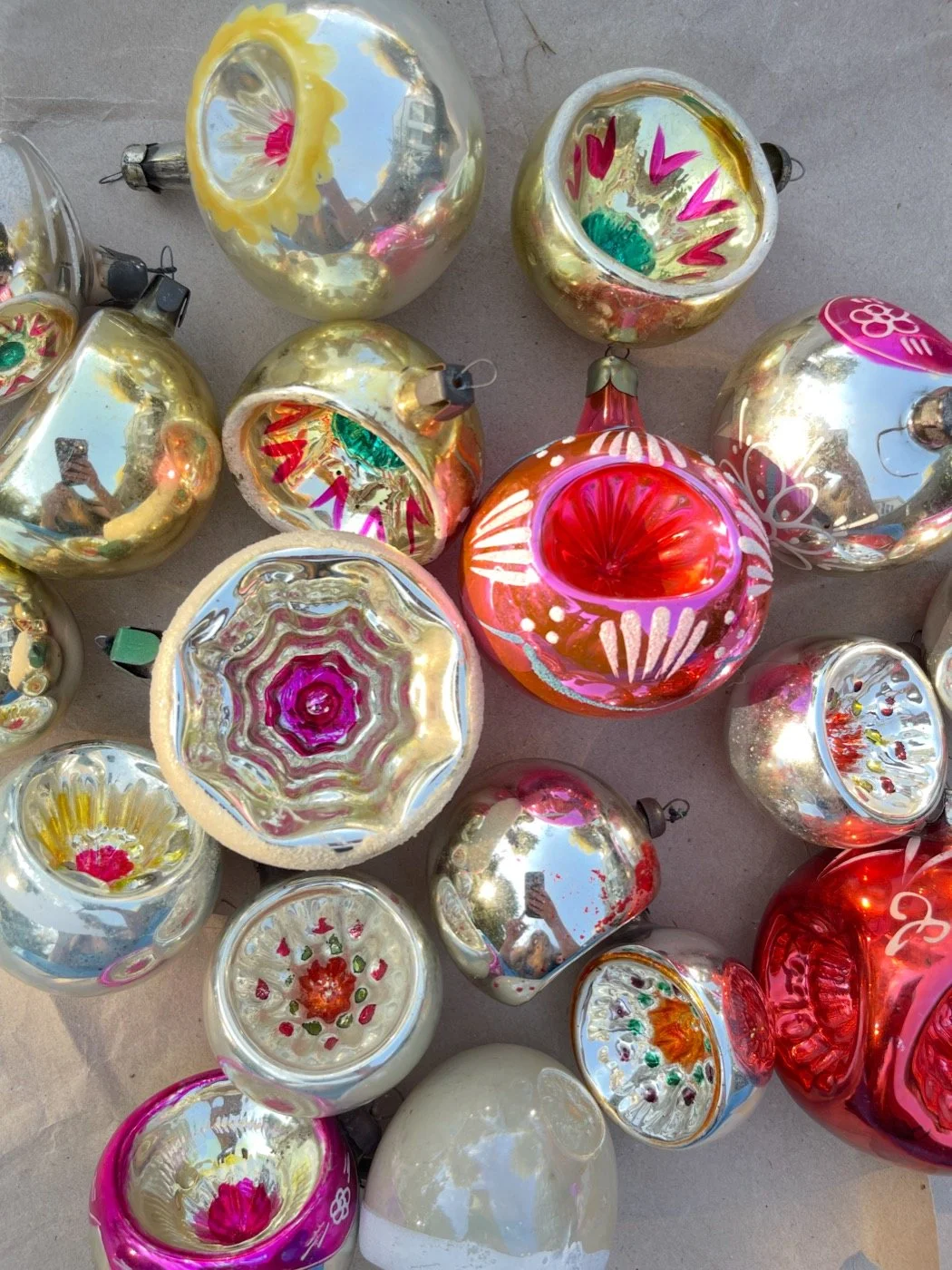
An indent Christmas ornament has a recessed area pressed into the glass. Instead of being a simple round ball or shaped figure, part of the ornament dips inward, creating a concave center.
That recessed area may be plain, colored, striped, faceted, or highly reflective. The shape was meant to catch tree lights and add depth to the ornament. Indents can appear on round ornaments, teardrops, lantern shapes, bells, ovals, and more unusual molded glass forms.
Some ornaments have one indent on the front. Others have indents on both sides, which are often called double-sided indent ornaments.
Indent vs. Reflector: What’s the Difference?
The terms “indent” and “reflector” are often used together, but they do not always mean the exact same thing.
An indent refers to the recessed shape itself. A reflector usually refers to a shiny, colorful, or faceted center that reflects light. Many reflector ornaments are indented, but not every indent ornament has a dramatic reflector center.
For example, a simple concave glass ornament may be called an indent. A more colorful ornament with a bright, faceted center may be described as a reflector indent.
Collectors often use both terms because the designs overlap.
Signs an Indent Ornament May Be Vintage
No single feature proves an indent ornament is vintage. The best identifications come from several clues working together.
Start With the Glass
Older indents often feel light for their size. The glass may be thin, slightly uneven, or more delicate than a newer reproduction. Look at the deepest part of the indent, the neck, and the edges around the recessed area. These are common stress points.
Thin glass alone does not prove age or origin, but it tells you to slow down.
Look at the Reflector Center
The reflector center is often the most decorative part of the ornament, but it is also one of the most vulnerable. Check whether the center is smooth, faceted, painted, striped, or mirrored. Look for cloudiness, silver loss, flaking, moisture damage, or paint wear inside the recess.
A strong reflector should still catch light, even if it shows age.
Related guides: Indent and reflector ornaments are part of the larger world of vintage glass Christmas ornaments, and some early examples overlap with German glass ornament traditions. Before cleaning or packing fragile indents, read the care and storage guide. For price and rarity questions, the vintage ornament value guide is a useful next step.
You can also shop vintage reflector and indent ornaments or use the Tinsel Box ornament organizer app to document shape, color, condition, storage location, and value notes.
Check the Shape Around the Indent
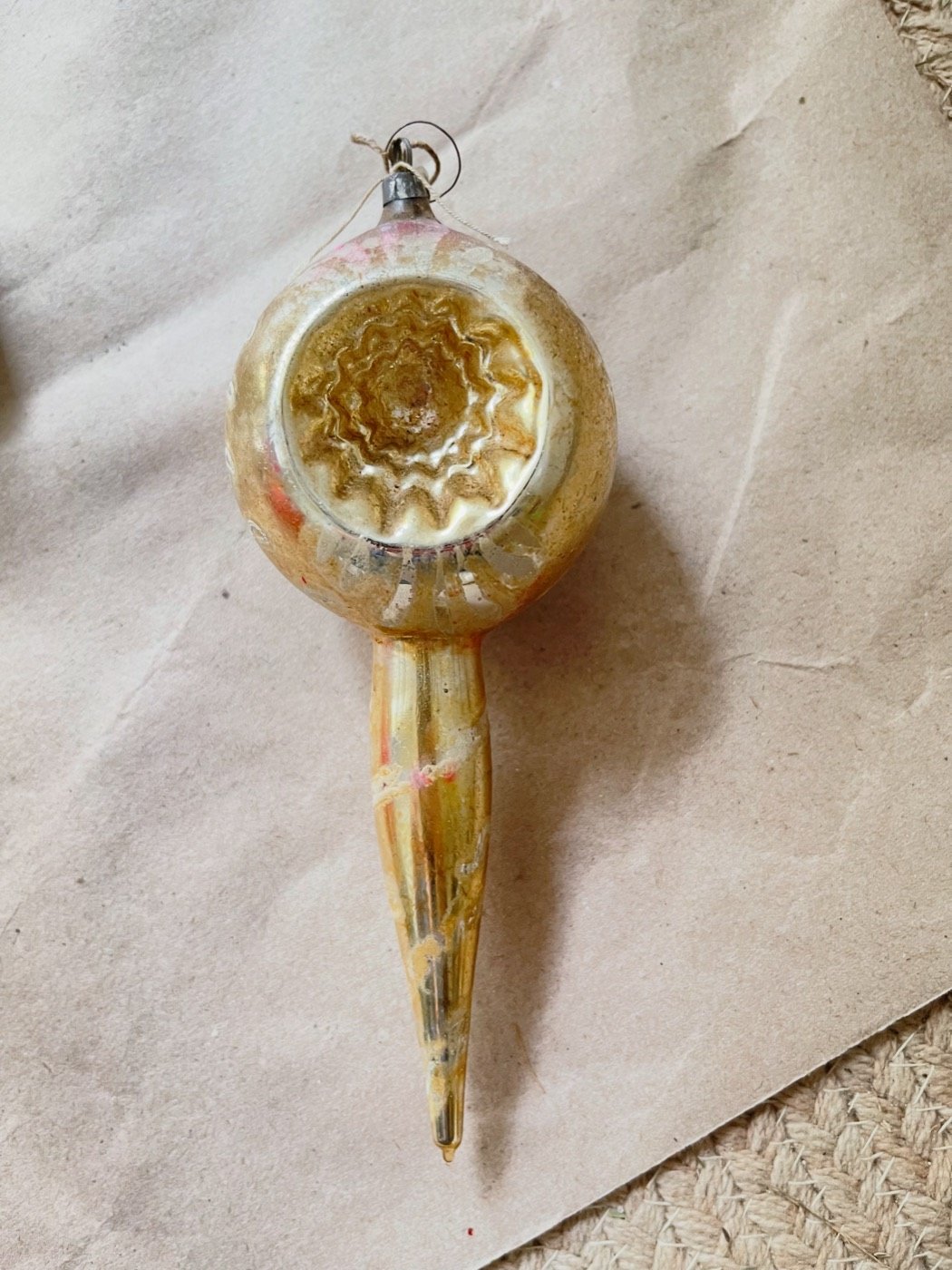
Indents appear on more than round ornaments. You may see them on teardrops, bells, lanterns, ovals, double-sided forms, finials, and molded shapes. The more unusual the surrounding shape, the more carefully you should compare it.
A plain round indent can be beautiful. A double-sided teardrop, lantern, or figural indent may have stronger collector interest if condition is good.
Examine the Cap and Neck
The cap can offer clues, but it should never be treated as proof. Caps are often lost, swapped, or replaced. Instead of asking only, “Is the cap old?” ask whether it fits the ornament naturally.
Check:
Does the cap sit properly on the neck?
Is there old wear beneath it?
Is the pike chipped, cracked, or broken?
Is glue hiding damage?
Does the cap look too new for the ornament?
A replaced cap does not make an ornament worthless, but it should make you more cautious about identification.
Study the Wear
Vintage indents may show softened silvering, paint loss, oxidation, fading, or wear near the cap. That can be normal. What matters is whether the wear makes sense for the object.
Be more concerned about cracks radiating from the indent, broken pikes, unstable caps, cloudy interiors, glue residue, or sharp chips.
German Glass Indent Ornaments
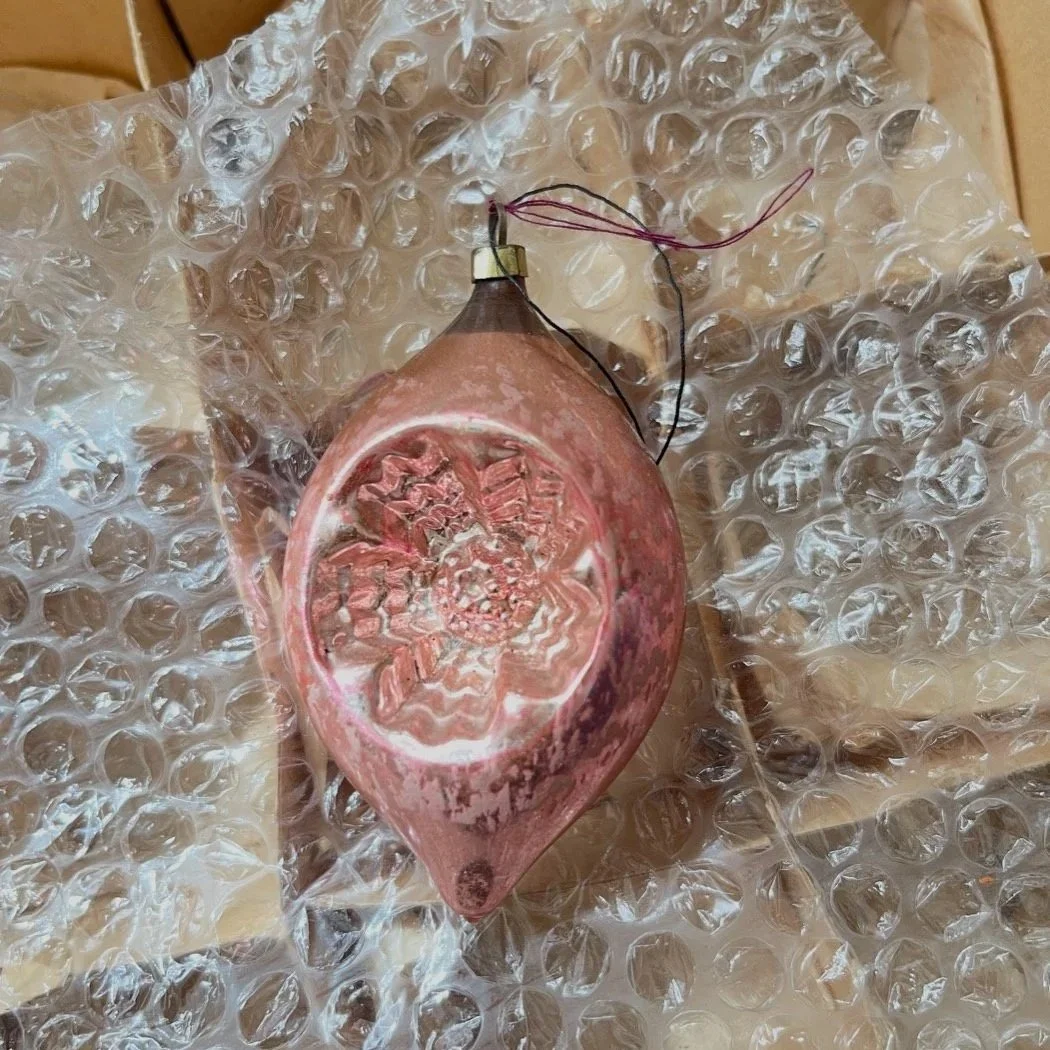
Many highly collected indent ornaments are associated with German glassmaking, especially older examples with thin glass, delicate pikes, hand-finished surfaces, mica, unusual shapes, and strong reflector centers.
But “German” should not be used as a catchall for every old-looking indent. Without a box, label, provenance, or strong construction clues, origin can be difficult to confirm.
A more careful description is often better:
“Vintage glass indent ornament”
“Vintage reflector indent”
“Older-style double-sided indent”
“Possibly German, based on construction”
“German glass indent” only when the evidence is stronger
That kind of restraint builds trust with collectors.
Double-Sided Indent Ornaments
Double-sided indent ornaments have recessed designs on both sides. These are especially appealing because they have dimension from every angle, making them beautiful on a tree or displayed in a collection.
A double-sided indent ornament may have matching centers on both sides, or each side may vary slightly. Because the glass is shaped inward on both sides, these ornaments can be fragile, especially around the neck, edges, and deepest parts of the indent.
Collectors often like double-sided indents because they feel more sculptural than standard glass balls.
Condition Issues to Look For
Condition matters with vintage indent ornaments, especially because the glass can be thin and the recessed areas may be vulnerable.
Look for:
Silvering loss
Paint wear
Cloudiness inside the glass
Chips at the neck or pike
Loose or replaced caps
Cracks near the indent
Breaks hidden under the cap
Repairs or glue residue
Some wear is normal with old ornaments. A little oxidation or paint loss may be expected, especially on pieces that have been used and stored for decades. Larger cracks, broken necks, or unstable caps should be noted before buying.
Quick Identification Checklist
Before buying or listing an indent ornament, check:
Is it single-sided or double-sided?
Is the reflector center painted, mirrored, faceted, or plain?
Is the glass thin or heavy?
Is the pike intact?
Are there cracks near the indent?
Is the cap original, replaced, missing, or glued?
Is the silvering stable?
Does the ornament hang safely?
Is the shape common or unusual?
Are you sure of the origin, or should you describe it more conservatively?
Indent ornaments are easy to love because they catch light so beautifully. They are harder to identify because shape, origin, age, and condition can overlap. The more specific your description, the more useful it becomes.
Final Notes for Collectors
Vintage indent Christmas ornaments are worth learning to recognize because they show so many of the details collectors love: thin glass, reflective centers, hand-finished color, delicate construction, and age that modern ornaments do not fully replicate.
Whether you collect German glass, mid-century reflectors, double-sided indents, or mixed vintage ornaments, the best approach is to look closely, handle carefully, and document what you learn about each piece over time.
You can learn more about vintage Christmas ornaments in our beginner guide, or shop vintage Christmas ornaments from The Tinsel Box.
About the Author
Written by Leslie Brocksmith, founder of The Tinsel Box. Leslie curates vintage Christmas ornaments and shares collector-focused guidance on ornament care, identification, storage, and display.