

How to Care for Vintage Christmas Ornaments
Why Caring for Vintage Ornaments Matters
Vintage Christmas ornaments carry a quiet history in their glass, paint, and form. Each piece reflects the craftsmanship of its time — and with thoughtful care, can continue to be part of holiday traditions for years to come.
Many of these ornaments were created by hand, whether blown in small German workshops, assembled from spun cotton and wire, or painted individually in mid-century studios. Their materials were delicate even when new, and decades of storage and seasonal use can make them more sensitive to handling. Proper care is not about making them look untouched; it is about protecting their original character.
Preservation allows these pieces to retain both their beauty and their story. Gentle handling, appropriate storage, and minimal cleaning help ensure that subtle paint finishes, fragile glass, and original construction details remain intact. When cared for thoughtfully, vintage ornaments are not simply decorations — they become enduring heirlooms.
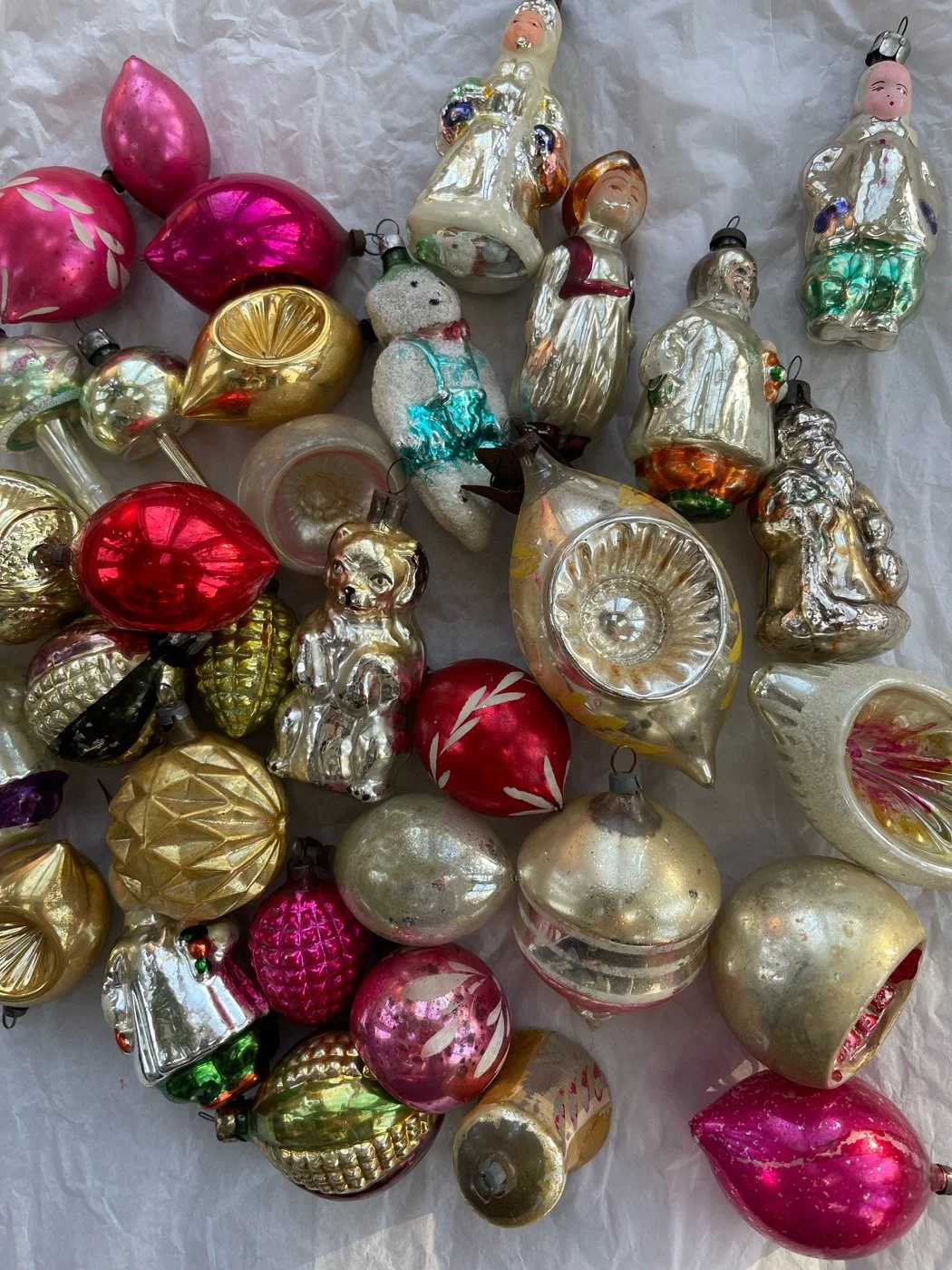
Handling Vintage Ornaments Safely
The simplest care starts with how you pick an ornament up. Support the body of the ornament rather than lifting by the hook, cap, or wire. Avoid gripping painted areas firmly, remove rings or bracelets when handling delicate glass, and work over a padded surface when unpacking.
Those small habits prevent a lot of avoidable damage, especially with thin glass, fragile pikes, old caps, and painted surfaces.
Cleaning Vintage Christmas Ornaments
Cleaning vintage Christmas ornaments should be conservative. In most cases, less is better. Dust and light surface debris can usually be removed without moisture, scrubbing, or pressure.
For glass ornaments, start dry. A soft microfiber cloth or a clean makeup brush is often enough for surface dust. Use very light pressure, especially on hand-painted areas, mica, stenciling, or mirrored finishes. Avoid water on antique glass, mercury-glass-style ornaments, and anything with painted details. Moisture can work under decorative layers and lead to flaking, oxidation, or cloudiness.
Spun cotton ornaments need even more caution. Cotton batting absorbs moisture quickly, so skip water entirely. Use a soft artist's brush to lift dust gently, and avoid compressed air because it can loosen paper trims or old adhesive points.
Reflector and indent ornaments have their own weak spots. The recessed center is vulnerable to pressure and moisture, so clean only the exterior surface and avoid pushing into the indent.
When in doubt, leave the ornament lightly dusted. Patina, soft paint wear, and signs of age are part of the object. Preserving original finishes matters more than making an old ornament look new.
Storing Vintage Ornaments Between Seasons
Storage is where many vintage ornaments get damaged. Most breaks do not happen while an ornament is hanging on the tree. They happen when pieces are rushed back into bins, wrapped in old newspaper, stacked under heavy boxes, or stored somewhere too hot, damp, or crowded. Condition also affects what collectors look for when judging value, so storage is part of preservation.
A good storage system should do three things: prevent movement, reduce pressure, and keep materials stable.
Wrap each ornament by material and fragility
Use acid-free tissue when possible, especially for antique glass, mica, cotton, paper, and painted pieces. Soft, unprinted tissue is safer than newspaper because ink can transfer and old paper can cling to fragile surfaces.
Do not wrap every ornament the same way. A sturdy mid-century glass ball can usually tolerate more handling than a double-sided indent, a spun cotton figure, or an ornament with a damaged neck. The more fragile the piece, the more space and support it needs.
Separate high-risk pieces
Some ornaments should not be packed loosely with the rest of the collection. Set aside pieces with cracked or weak necks, indents and reflectors with vulnerable recessed centers, spun cotton figures, mica-covered ornaments, mercury glass bead garlands, loose caps, sentimental pieces, higher-value ornaments, and anything already repaired or unstable.
Use smaller boxes, divided trays, or labeled compartments so fragile ornaments are not carrying the weight of sturdier ones.
Avoid plastic bags for long-term storage
Plastic bags can trap moisture and press against delicate finishes. They also let ornaments rub against one another when several pieces are placed in the same bag. For vintage glass, cotton, and paper ornaments, breathable wrapping and stable boxes are usually safer.
Control the environment
Avoid hot attics, damp basements, garages, sheds, and storage areas with big temperature swings. Heat can soften adhesives, worsen paint loss, and stress old materials. Dampness can affect boxes, paper trims, cotton, metal caps, and garland stringing.
A cool, dry interior closet is often better than a large storage bin in an extreme environment.
Label more than the box
A label that says "Christmas" is not enough once a collection grows. Label by type, fragility, or display plan: German glass fragile, Shiny Brite boxed sets, mercury glass garlands, spun cotton, tree-ready favorites, repair before hanging, or display only.
This saves time later and prevents fragile ornaments from being handled repeatedly just to find one piece.
Repairing vs. Preserving
When it comes to vintage Christmas ornaments, repair should be approached carefully. Not every imperfection needs correction, and visible age is often part of what gives a piece its character. Gentle paint wear, softened finishes, and minor signs of time do not automatically make an ornament less meaningful or less collectible.
Collectors often prefer original finishes over modern repainting or heavy restoration. Loose caps or detached hooks may need careful stabilization, but cosmetic changes can reduce the integrity of a piece. Preservation usually means protecting what remains, not trying to recreate what once was.
If an ornament is significantly damaged, especially if it is rare or valuable, it may be worth asking a professional conservator before attempting repairs. A subtle conservation-minded repair is different from decorative restoration. The goal is to extend the life of the ornament while respecting the original craftsmanship.
Displaying Vintage Ornaments Safely
Displaying vintage Christmas ornaments is part of the joy of owning them. They were made to be seen. The key is placing them where they can be enjoyed without adding unnecessary stress.
On a tree, heavier glass ornaments usually do better closer to the trunk, where branches are stronger. More delicate pieces, such as spun cotton ornaments or early reflector styles, are often safer slightly inward rather than on branch tips where movement is greater.
Spacing matters too. Crowded branches can cause ornaments to bump against one another, which increases the chance of chipped paint, rubbed finishes, or hairline cracks. A little breathing room protects the ornaments and lets their shapes show.
Keep vintage ornaments away from direct heat sources such as fireplaces, radiators, and strong lights. Heat can speed up paint deterioration and weaken old adhesives. If a piece feels especially fragile, rotate it into display every few years instead of handling it heavily every season.
Vintage ornaments do not need to be hidden away. With balanced placement and a stable environment, they can still be part of the tree.
Before You Pack the Tree Away
The best time to protect your collection is while you are taking the tree down.
Before packing, look for loose caps, new cracks, paint flakes near the hook area, weak wires, broken garland strands, and pieces that should be retired from tree use. If an ornament needs a separate box next year, note that before it disappears into storage.
Take a few photos of favorite groupings before everything goes back into boxes. If a display worked especially well, record it. If a fragile ornament made you nervous, note that too. Good care is not only about materials. It is about remembering what each piece needs before the next season arrives.
Frequently Asked Questions
-
Use a soft, dry, lint-free cloth or a clean makeup brush. Avoid water on painted, mirrored, mica, or mercury-glass-style surfaces.
-
In most cases, no. Do not submerge vintage ornaments or clean them with liquid. Water can damage finishes, paper trims, cotton, metal caps, and interior silvering.
-
Wrap them individually in soft, unprinted acid free tissue and keep them in a cool, dry interior space. Fragile pieces should have their own compartments or smaller boxes so they are not carrying weight from sturdier ornaments.
-
Many antique ornaments can still be displayed with careful handling, stable branches, and thoughtful storage. Pieces with cracks, weak caps, or sentimental value may be better displayed in a safer spot rather than used heavily on the tree.
Final Thoughts
Caring for vintage Christmas ornaments is really about slowing down. These pieces have already made it through years of trees, boxes, closets, and family moves. With gentle handling and thoughtful storage, they can keep being part of the season without being treated like they are too fragile to enjoy.
Explore our collection of vintage Christmas ornaments to find pieces worth preserving.
If you want to track where ornaments are packed, the Tinsel Box ornament organizer app can keep storage locations, photos, condition notes, and value notes together.
About the Author
Written by Leslie Brocksmith, founder of The Tinsel Box. Leslie curates vintage Christmas ornaments and shares collector-focused guidance on ornament care, identification, storage, and display.