

Starting a vintage Christmas ornament collection does not require becoming an expert overnight. It often begins with one box from a family attic, one estate-sale find, or one style that keeps catching your eye.
The best first collection is not necessarily the rarest or most valuable. It is one that helps you notice what you genuinely love. This guide will help you choose a direction, examine ornaments more carefully, decide what condition works for you, buy with fewer regrets, and know when to use a more specialized collecting guide.
What Counts as Vintage or Antique?
Collectors often use vintage for ornaments that reflect an earlier era of materials, design, manufacturing, or holiday taste. Many sellers apply the word to pieces that are at least 20 years old, but age alone does not make an ornament collectible—or prove that a seller’s description is accurate.
Antique is generally reserved for pieces around 100 years old or older. In Christmas collecting, that can include early blown-glass ornaments, cotton figures, beadwork, paper ornaments, and other handmade decorations.
Treat age as one part of the answer. Material, construction, cap style, paint, wear, packaging, provenance, and overall form should support one another before you make a confident identification.
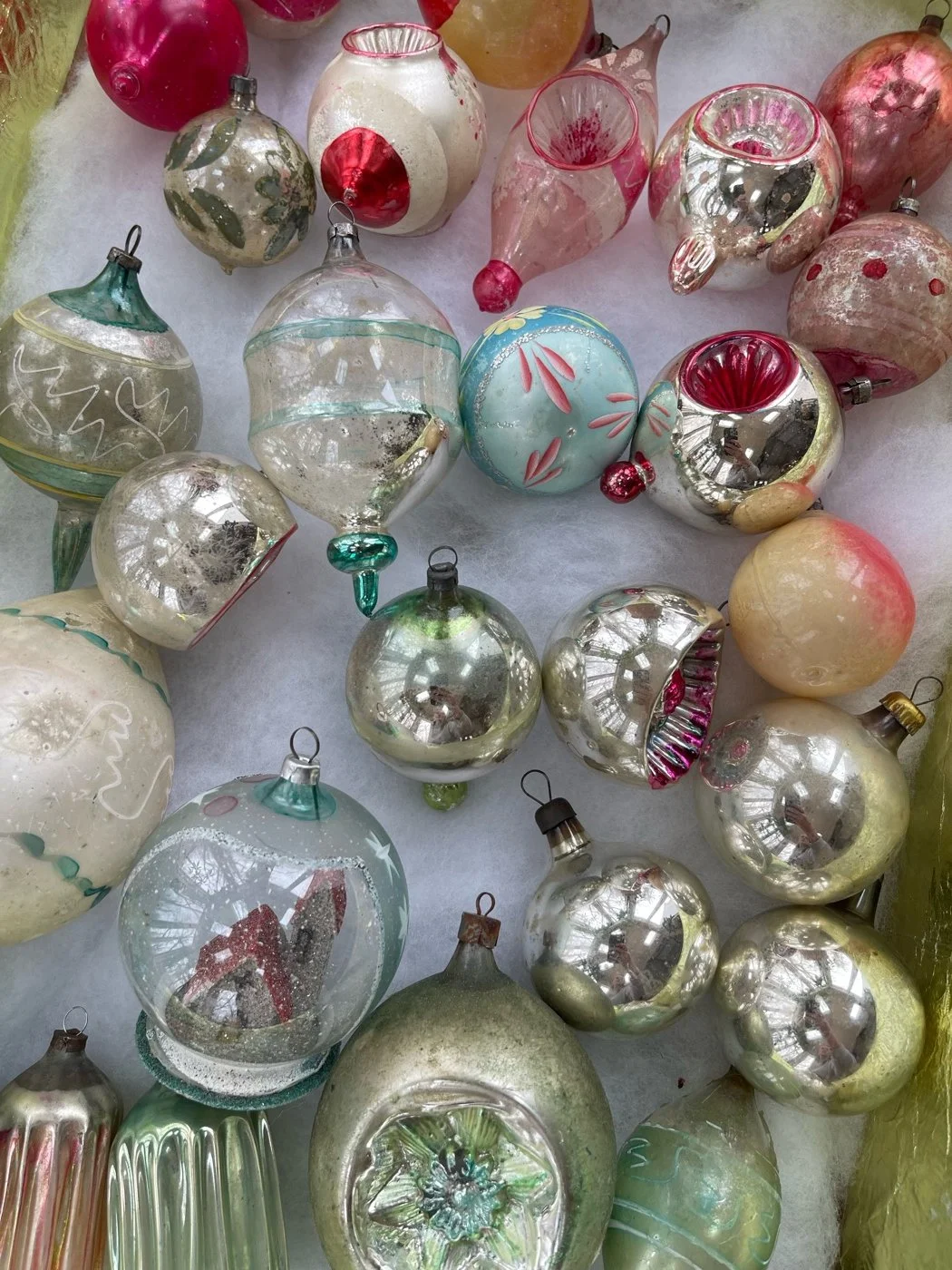
Antique German Christmas ornaments collected over years
Choose a Collecting Direction
A collection becomes easier to build when it has a point of view. You might begin with one country, material, color palette, subject, era, or ornament shape. Starting narrowly gives you time to learn what good examples look like before you spend heavily.
Your direction does not have to be permanent. Many collectors begin with familiar midcentury glass and later find themselves drawn to antique German figurals, Soviet-era tree toys, spun cotton figures, or glass bead garlands. Let your eye lead before the market does.
Antique German and Early Blown Glass
Many collectors are drawn to antique German Christmas ornaments for their thin blown-glass forms, delicate necks or pikes, indents, mica, and figural shapes such as fruits, birds, bells, baskets, and houses. Examine the form, cap, neck, silvering, paint, and wear together; no single detail proves age or origin.
If recessed reflector designs are what catch your eye, continue with the guide to vintage indent Christmas ornaments.
Midcentury American Glass
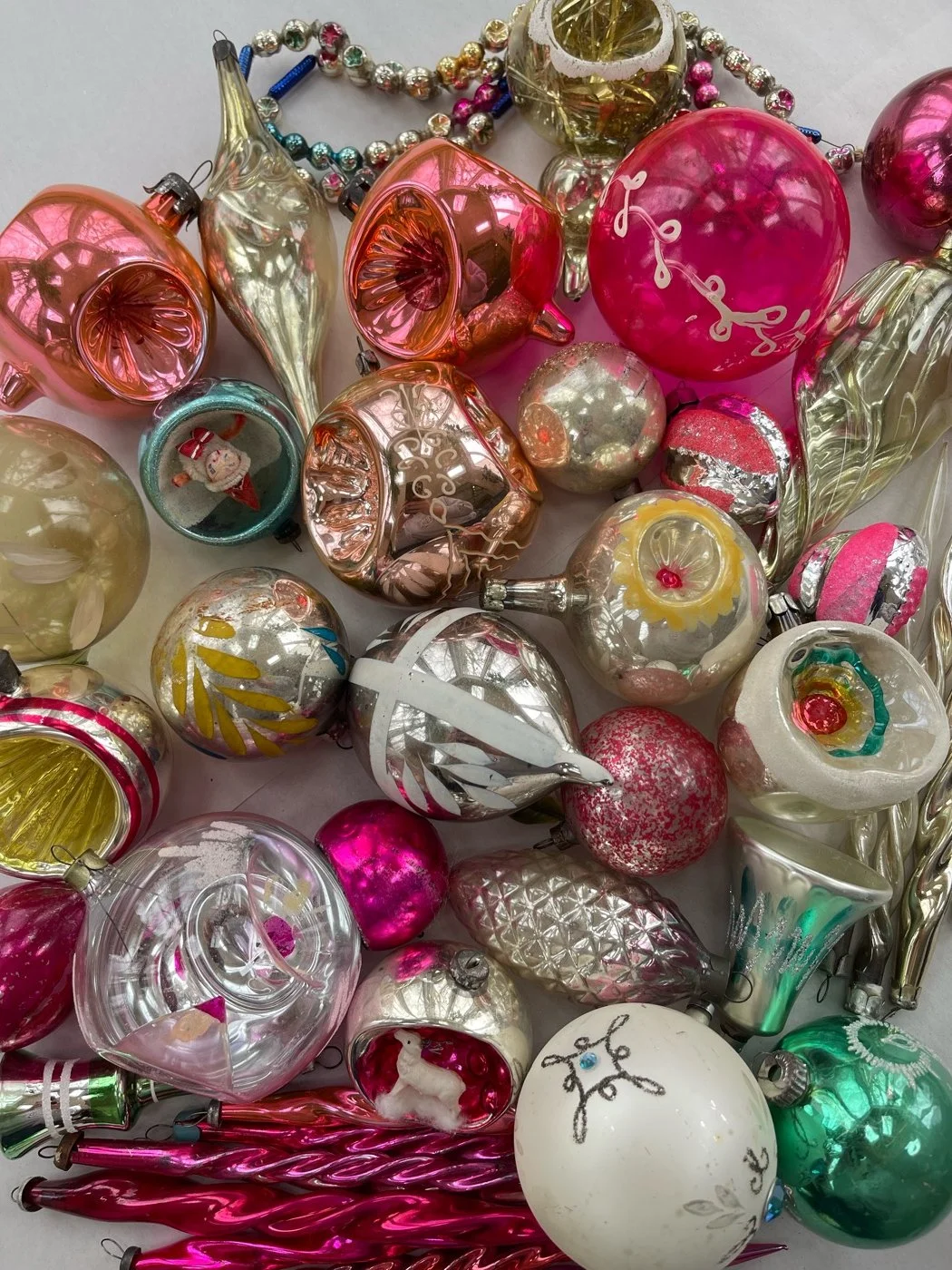
Midcentury American ornaments—including Shiny Brite and other familiar makers—can be an approachable place to begin. Boxed sets, striped balls, stenciled designs, bells, teardrops, and reflectors are often easier to find than earlier antique pieces.
These ornaments can be nostalgic and collectible without being rare. That makes them useful for learning how color, cap fit, box graphics, finish, and condition affect what you are willing to pay.
Polish and Other European Glass
Polish and other European ornaments can include bold colors, striped teardrops, icicles, bells, jumbos, indents, and highly reflective finishes. Because styles and production histories vary, avoid assigning a specific country from color or shape alone. Look closely at the neck, cap, paint, construction, packaging, and any marks that support the description.
Soviet-Era Ornaments
Soviet-era ornaments appeal to collectors who enjoy personality and storytelling. Common subjects include winter figures, animals, houses, vegetables, storybook characters, space themes, and everyday objects. Sellers may call them “tree toys,” but the same rule still applies: judge the material, construction, condition, and evidence behind the attribution—not just an appealing listing title.
Spun Cotton, Cotton Batting, and Handmade Figures
Spun cotton and cotton batting ornaments may include Santas, angels, snowmen, animals, children, and folk-art-style figures. Look at the underlying structure, staining, facial detail, clothing, accessories, repairs, and whether the cotton has retained its shape. Age-related wear can be part of their character, but crushed forms, replaced parts, and unstable attachments should affect the description and price.
Garlands, Toppers, and Display Pieces
Glass bead garlands, tree toppers, bottle brush trees, tinsel, miniature figures, and tabletop decorations can round out a collection. They may not all be ornaments in the strictest sense, but they help create the world in which the ornaments will be displayed.
Learn the Basic Identification Clues
Before buying an unfamiliar ornament, slow down and look for physical evidence. Begin with the material: glass, cotton, paper, metal, plastic, wax, or a combination. Then look at how it was made. Does the glass appear thin-blown or molded? Is there a seam? Does the cap fit the neck naturally? Do the paint, silvering, mica, glitter, hanger wear, and packaging seem consistent with one another?
One clue is rarely enough. A convincing identification usually comes from several details lining up, while a replaced cap, newer glitter, or mismatched box can complicate the story.
Use the vintage Christmas ornament identification guide for a closer examination process. If the piece is glass, the vintage glass Christmas ornament guide goes deeper into construction, finishes, caps, and origin clues.
Decide What Condition Works for You
Condition affects desirability, but not every type of wear matters equally. Softened silvering or gentle paint loss may be acceptable on an early figural. A cracked neck, unstable hanger, active flaking, crushed cotton, water damage, or a repair that changes the form may matter much more.
Decide what you are comfortable displaying and storing before you buy. Some collectors prefer bright, display-ready pieces. Others love soft patina, old repairs, and ornaments that visibly carry their history. Either approach can build a beautiful collection when the condition is clearly disclosed and reflected in the price.
Think About Value Without Chasing “Rare”
Not every old ornament is rare, and not every unusual-looking ornament is valuable. Price usually reflects some combination of condition, form, material, origin, age, subject, documentation, and current collector demand.
Common midcentury balls can be wonderful without being expensive. Higher prices may be justified by an unusual shape, a desirable subject, excellent condition, original packaging, documented origin, or strong demand within a collecting category. Asking prices alone do not establish market value; compare sold examples when possible and make sure you are comparing genuinely similar pieces.
For a fuller explanation, read Are Vintage Christmas Ornaments Worth Anything?
Where to Find Vintage Christmas Ornaments
Collections grow through family boxes, estate sales, antique malls, flea markets, reputable dealers, collector groups, and online marketplaces. Each source has different advantages.
In person, you can inspect the cap, neck, paint, weight, cracks, and hanger stability. Online, look for clear front-and-back photos, close-ups of the cap and neck, measurements, a specific condition description, and a return policy you understand. Be cautious when a listing relies on words such as “rare,” “antique,” or “museum quality” without showing the evidence behind the claim.
Before buying, ask yourself three questions: Would I still want this ornament if it were not rare? Is the condition acceptable for how I plan to display it? Is the price comfortable even if a more exact identification changes later? Those questions prevent more regret than trying to memorize every valuable ornament.
You can also shop vintage Christmas ornaments curated by The Tinsel Box or browse focused collections such as antique German ornaments and reflector and indent ornaments.
Document the Collection From the Beginning
Even a small collection becomes easier to research, protect, and enjoy when you document it. Photograph the front, back, cap, neck, underside, and any box or label. Record where the ornament came from, what you paid, condition notes, measurements, storage location, and any family story attached to it.
A notebook or spreadsheet is enough to begin. If you want photos, collection details, storage locations, display plans, values, and Wish List pieces in one place, the Tinsel Box ornament inventory app is designed specifically for Christmas ornament collectors and is free for the first 25 ornaments.
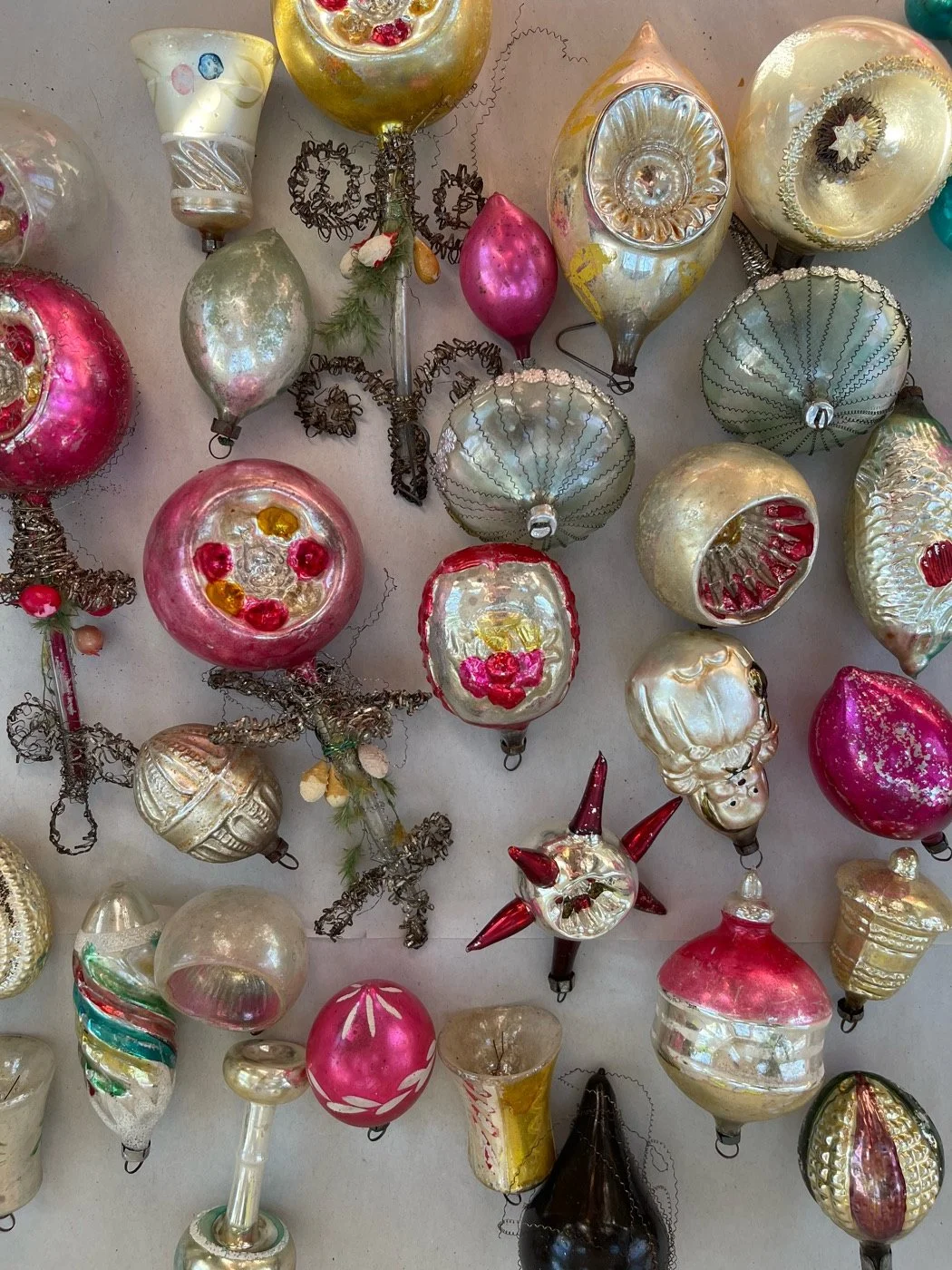
Fragile antique ornaments require proper care and storage
Care, Handling, and Storage Basics
Handle fragile ornaments with clean, dry hands and avoid lifting them by the cap or hanger. If a cap, neck, or attachment feels loose, stop before hanging the piece. Do not assume an old finish can tolerate water or a household cleaner; aggressive cleaning can permanently remove paint, silvering, mica, paper, or other delicate surfaces.
Store ornaments separately so they do not rub, using acid-free tissue when appropriate. Keep them in a stable indoor environment away from moisture, heat, crushing weight, and sudden temperature changes. For detailed guidance by material, see How to Care for Vintage Christmas Ornaments.
A Simple First-Collection Plan
Choose one collecting lane and study several good examples before buying heavily. Start with a small group you can comfortably display, document each piece, and pay attention to what you keep reaching for. Your taste will become more specific as your eye develops.
There is no prize for building a collection quickly. A thoughtful collection grows through comparison, curiosity, and the pleasure of finding pieces that feel unmistakably yours.
Frequently Asked Questions
What should a beginner collect first?
Start with the ornaments you are naturally drawn to and can afford to study without pressure. Midcentury glass is often accessible, but a good first lane could also be Santas, reflectors, one color, one country, or ornaments connected to family memories.
How can I tell whether an ornament is really vintage?
Begin with its material and construction, then compare the cap, neck, finish, paint, wear, packaging, and seller history. No single feature proves age. Use the physical evidence together and leave room for an uncertain identification when details conflict.
Do vintage ornaments need to be in perfect condition?
No. Many collectors accept age-related wear, especially on fragile or handmade pieces. Structural damage, active paint loss, unsafe hangers, replaced parts, and repairs should still be disclosed and considered in the price.
Are all vintage Christmas ornaments valuable?
Many old ornaments are common and affordable. Value depends on the specific piece, including its condition, form, material, origin, subject, documentation, and current collector demand.
How should I store a growing collection?
Keep ornaments separated, label their storage locations, avoid heat and moisture, and document what is in each box or bin. Fragile finishes and mixed materials may need more specialized care.
Continue Your Collecting Journey
When you are ready to go deeper, use the guide that matches the question in front of you:
About the Author
Written by Leslie Brocksmith, founder of The Tinsel Box. Leslie collects, researches, photographs, and catalogs vintage Christmas ornaments with a focus on practical identification, careful condition notes, and preserving the stories attached to each piece.