

Antique German Christmas Ornaments
From grape clusters and embossed figurals to deep reflector indents, German glass ornaments offer a wonderful variety of shapes, finishes, and hand-finished details.
Choose a piece for the details you love, then look closely at its construction and condition. Each listing has photos and notes to help you compare wear, measurements, and the features that make that ornament distinctive.
Selected from the collection
Choosing a German ornament
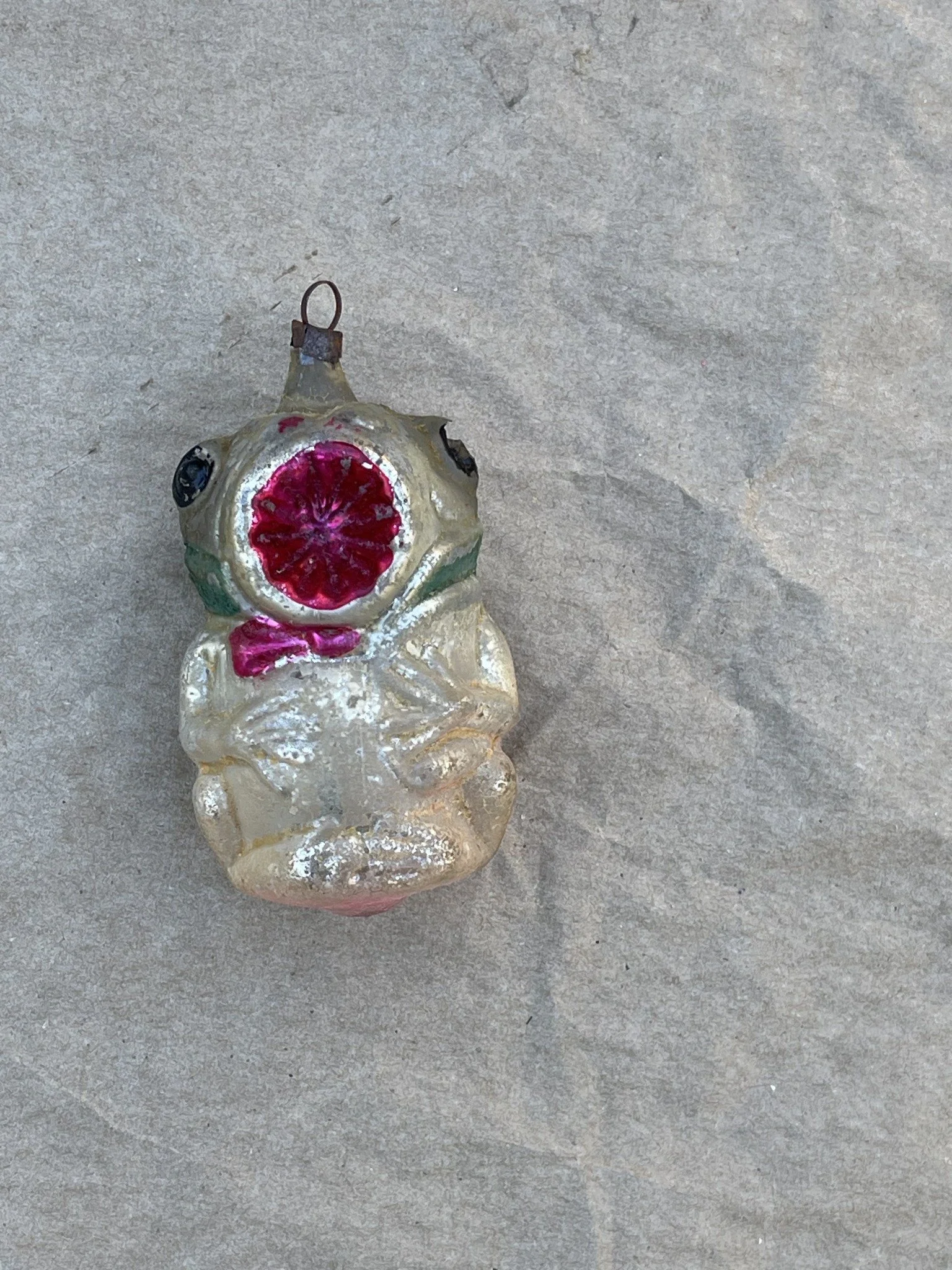
Start with the form that catches your eye. Grape clusters bring sculpted detail; embossed figurals reward a closer look; indents and reflectors add depth and catch the light. Compare the front, back, and profile rather than judging a piece from one photograph.
Look closely at condition
Glass and neck: Check for cracks, chips, a shortened or broken pike, and repairs around the cap. Thin glass needs careful handling.
Finish: Look for paint wear, silvering loss, cloudiness, and loose mica. Decide which signs of age you enjoy and which would affect how you display the piece.
Cap and hanger: A cap may have been replaced. Check its fit and stability; the cap alone cannot establish age or origin.
Size: Review the measurements and consider where the ornament will hang, especially with longer drops or wider reflector forms.
Let the evidence guide the description
Shape, construction, finish, wear, packaging, and documented history are more useful together than any one clue. An old-looking surface alone does not establish German origin. For a closer look, read how to identify antique German Christmas ornaments.
Open a product listing for its current availability, photos, condition notes, and measurements before choosing your piece.
Browse the full German ornament collection
Berry-shaped ornament with a white crushed-glass coating over a pale pink finish. The coating is thinner toward the bottom, showing more of the pink underneath. See photos for condition and measurements.